Dimpled foils IZOFLEX
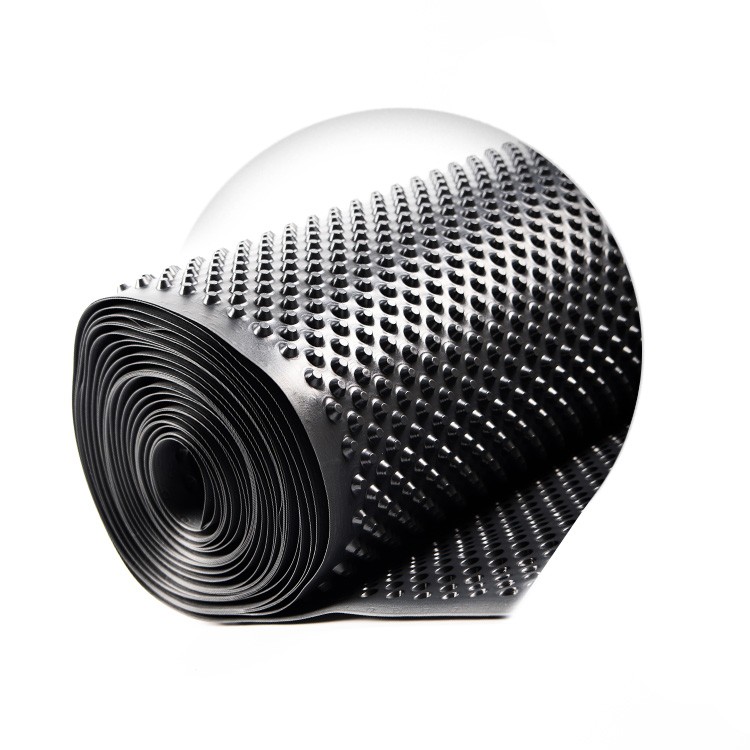
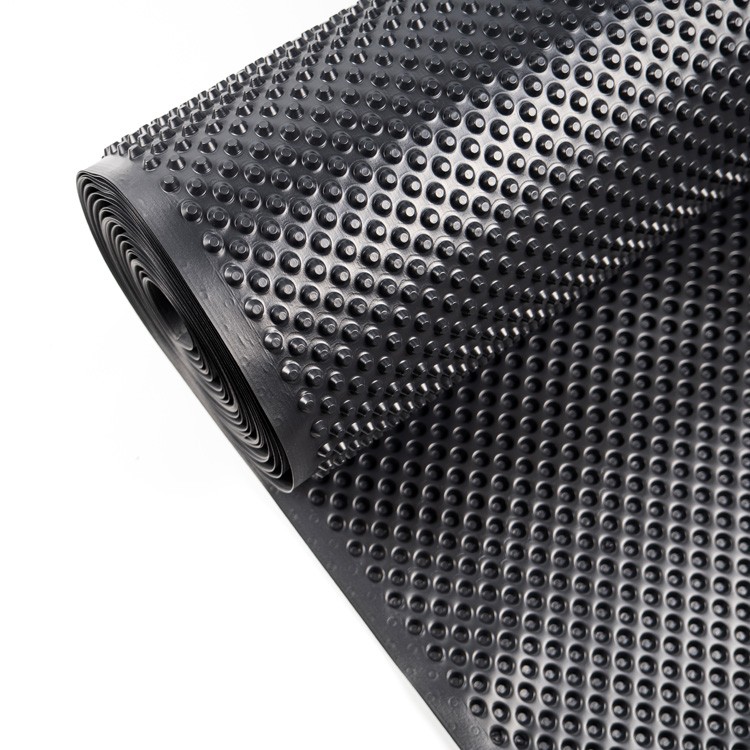
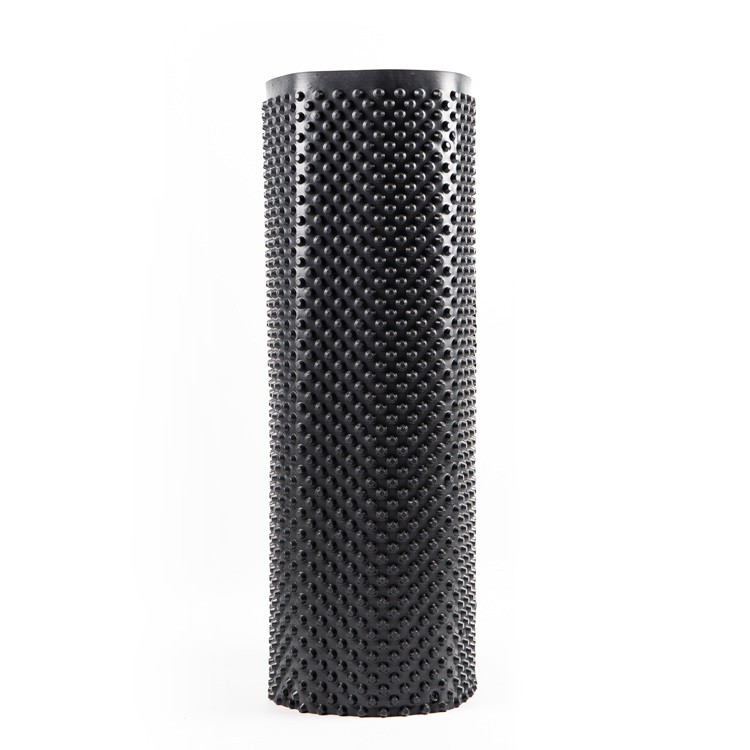
IZOFLEX film belongs to the group of waterproofing materials called extruded bucket films, used for sheltering foundations, floors, ceilings, walls and terraces. All kinds of IZOFLEX film are made of hard polyethylene (HDPE), highly resistant to all the substances occurring in the soil. The shape of the buckets is adjusted so that the pressure of the ground would not cause the film to fold. The buckets, open on the embankment side, are filled with soil, and thus the distribution of the forces influencing the film is favourable.
ADVANTAGES:
- High mechanical resistance preventing damages caused by the ground movements, backfilling or settling of the building.
- Fast and easy application possible in all kinds of weather conditions.
- Resistance to acids present in the soil, non-organic acids, water.
- Quick and effective water disposal into the draining system.
- Ensures optimal ventilation space.
- Enhances thermal insulation of walls and foundations.


However, to properly use this already-known material, it is worth remembering that the choice of the type of waterproofing and its application method both depend on the type of soil occurring in the ground and the level of groundwater. Therefore we can divide waterproofing into two major groups:
- damp-proof insulations (light), protecting the underground parts of buildings from the influence of water which does not exert the hydrostatic pressure;
- waterproof insulations (medium and heavy), protecting the underground parts of buildings from water which exerts the hydrostatic pressure.
Damp-proof insulations (light) can be used only in constructions, whose foundations are situated above the level of groundwater, whereas waterproof insulations (medium and heavy) in constructions with foundations below the level of groundwater.
Nevertheless, in many cases, in spite of the occurrence of groundwater under the foundations, the waterproof insulation is installed out of precaution, as water can surprise and cause considerable damage. Rainwater, coming from precipitation and soaking into the ground, can serve as a good example of such damage. Precipitation can pose a permanent or temporary threat to foundations, depending on its amount and frequency.
The level of the danger largely depends on the type of the ground on which the building is or is going to be constructed. It is enough to secure basement walls built in permeable grounds, such as sand or gravel, with damp-proof insulation, in form of bucket film, also known as foundation film or geomembrane. Great results are achieved by applying two films in a correct order: firstly, 0,3mm thick waterproofing polyethylene film (PE) and then IZOFLEX on top. There are a lot more possibilities of joining the co-operating materials. For instance, in waterproof insulations (heavy), three-layer system is applied. The first layer is tar paper, then comes PE film functioning as sliding material and finally bucket film which covers and drains the whole system of materials.
Bucket films are called drainage-ventilation films and are used in multilayer systems, for example with infiltrating mats or other specialized materials (e.g. for green terraces). They can also be used for drying basement walls from the inside or as a ventilation and insulation layer in terraces. They have been used this way for many years. It is also worthy of mention that terraces are not only classified as roofs but also as the most difficult roofs. These products are also known to be used in retaining walls and embankments in ground and road constructions.
|
PARAMETER |
Unit |
IZOFLEX 400 |
IZOFLEX 500 |
|
Substance |
g/m2 |
400 |
500 |
|
Standard length |
m |
20 |
20 |
| Mechanical Properties by streching | (N/5cm) | min. 135/135 | min. 180/180 |
|
Width |
m |
0,5; 1,0, 1,5; 2,0; 2,5; 3,0 |
0,5; 1,0, 1,5; 2,0; 2,5; 3,0 |
| Reaction on fire | - | class F | F |






© 2021 Marma Polskie Folie